



Got a story worth telling? Be our next guest!
🎙️ Apply now to be interviewed or published on our platform.


Author: Ievgeniia Rodionova, Business Development Mentor, AI & Digitalization Strategist, and Co-owner of ProBusiness.media
Small business owners often imagine digitalization as a technology upgrade. A new CRM. A few automations. An AI assistant. On paper, that sounds like progress. In practice, it often changes very little.
After working with founder-led businesses and teams across Europe, I keep seeing the same pattern: many SMEs try to modernize tools before they modernize how work actually happens. They buy software before they clarify workflows. They test AI before they define ownership.
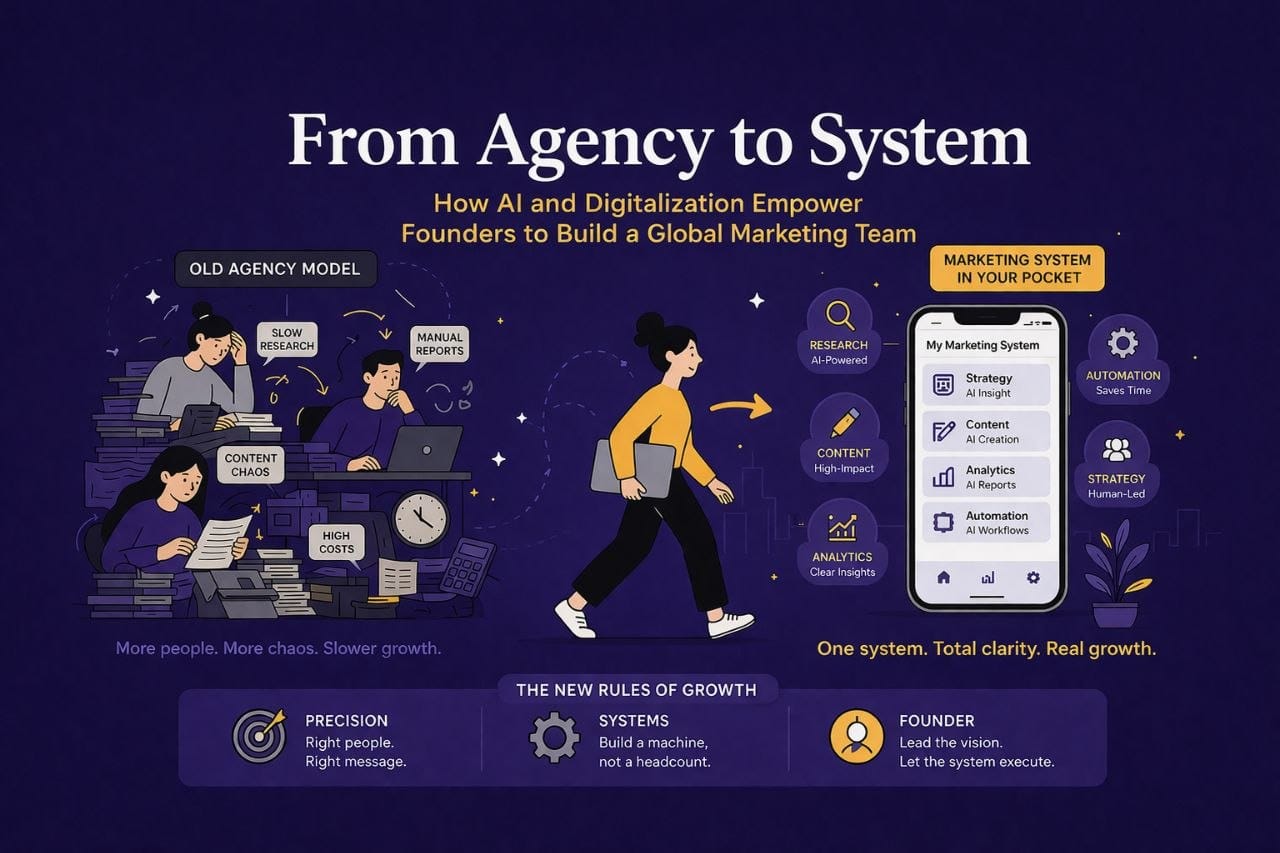
The result is familiar. More tools, more subscriptions, more tabs, but not always more clarity. Digitalization doesn't always reduce chaos; sometimes, it simply gives chaos a shinier interface.
Technology is helpful, but it isn’t a substitute for management. A CRM will not fix weak sales discipline, and an AI assistant cannot clarify a vague market position.
I often see businesses working across email, Instagram direct, WhatsApp, Excel, and a CRM that is only half-used. Then AI gets added on top. The stack becomes more impressive, but the system becomes harder to understand.
A broken workflow does not become smart just because it becomes digital. It only becomes faster at producing the same confusion.
Consider a common scenario: a founder invests in a CRM hoping for better sales visibility. But if no one clearly owns the follow-up process and the team still exchanges lead updates through scattered Telegram messages, the CRM quickly becomes an expensive archive rather than a working system. The tool exists, but the behavior hasn't changed.
Digitalization is not a tool decision first; it is an operational clarity decision. Before introducing AI or automation, founders should evaluate five key areas:
If these five areas are unclear, technology usually adds more noise than value.
AI is most effective when the business already has at least some process discipline. It can save time, structure information, and reduce manual repetition — but only when you know where the friction lives.
In small businesses, the best early use cases for AI are usually not strategic decisions, but repeated operational tasks. They are the most repetitive:
The goal of these "micro-shifts" is to make the process less dependent on one person’s memory. In many small businesses, the founder acts as the manual bridge between every moving part. If you add tools and the founder becomes an even bigger dispatcher than before, that isn't transformation — it’s software-assisted overload.
This is exactly where many businesses make a critical mistake.They introduce AI tools expecting immediate results, without defining the strategic logic behind them.But without a clear foundation, AI doesn’t solve chaos — it accelerates it.That’s why having a well-defined AI marketing strategy is more important than the tools themselves.
Team resistance is rarely about laziness. More often, it is a communication problem. People don't resist the technology; they resist the confusion it brings when introduced without context.
If the team doesn't understand the logic behind the change, even a high-end system will be treated like decorative furniture. This is why training and internal education are not optional extras — they are the core of the digitalization process itself.
Digitalization fails when a business tries to automate uncertainty. It succeeds when technology is used as structured support for a process that is already understood.
For founders, the real value of digitalization is not in looking modern. It is in making the business easier to run, easier to delegate, and easier to scale. When you stop treating technology as a rescue fantasy and start using it as an operational lever, it stops being a trend and starts becoming a competitive advantage.
At ProBusiness.media, we continue exploring how SMEs can use AI, automation, and clearer systems to grow without creating more operational noise.

Got a story worth telling? Be our next guest!
🎙️ Apply now to be interviewed or published on our platform.
Subscribe now for exclusive content and expert insights. Be the first to stay informed!

Probusiness Media is an independent editorial platform that explores the stories, strategies, and systems behind conscious entrepreneurship in times of change.
Where stories, strategy, and meaning come together.