



Got a story worth telling? Be our next guest!
🎙️ Apply now to be interviewed or published on our platform.


 Articles
She taught Europe to eat popcorn – and nearly retired to play golf: the story of Paula and Pique-Poque
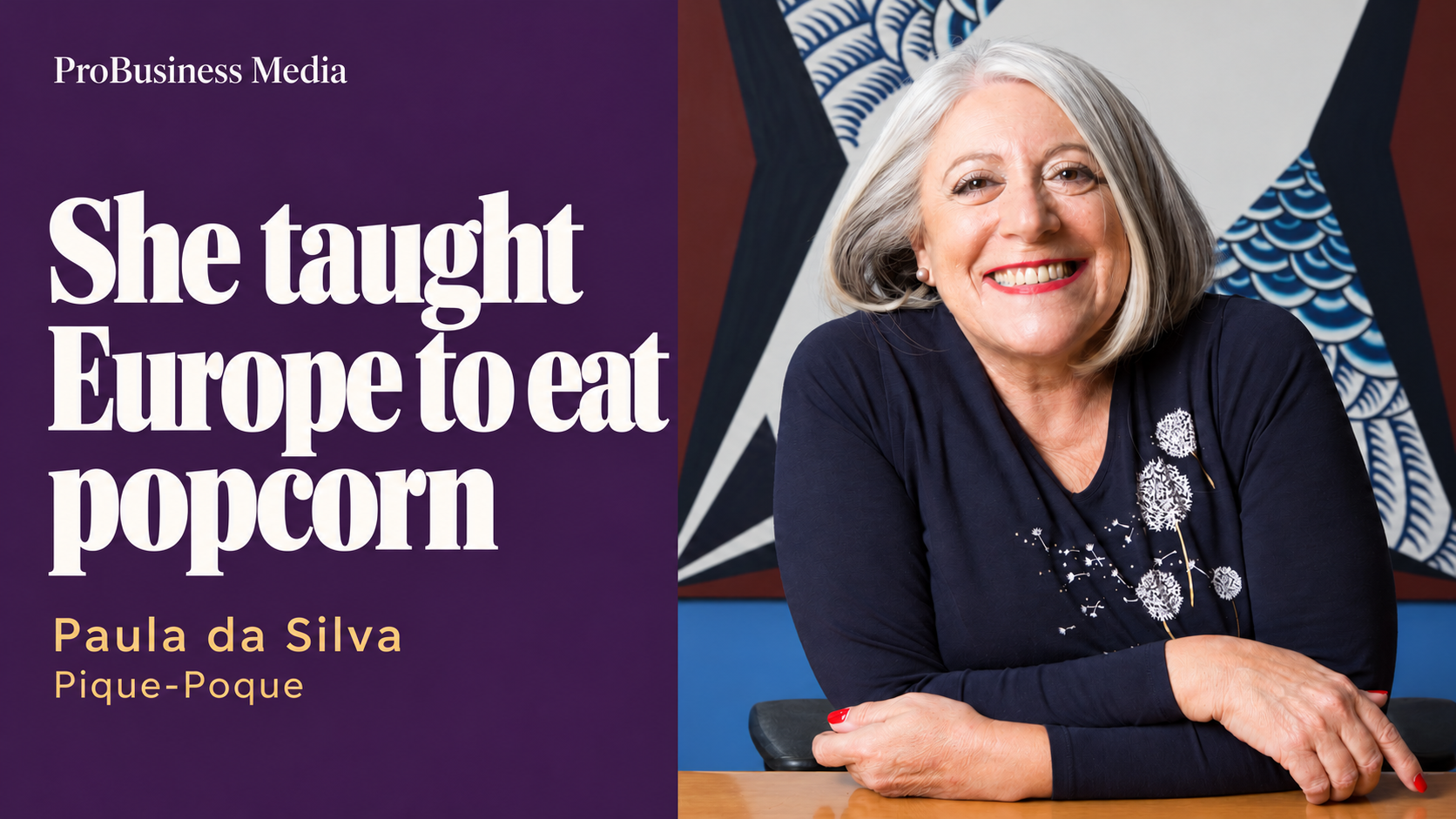
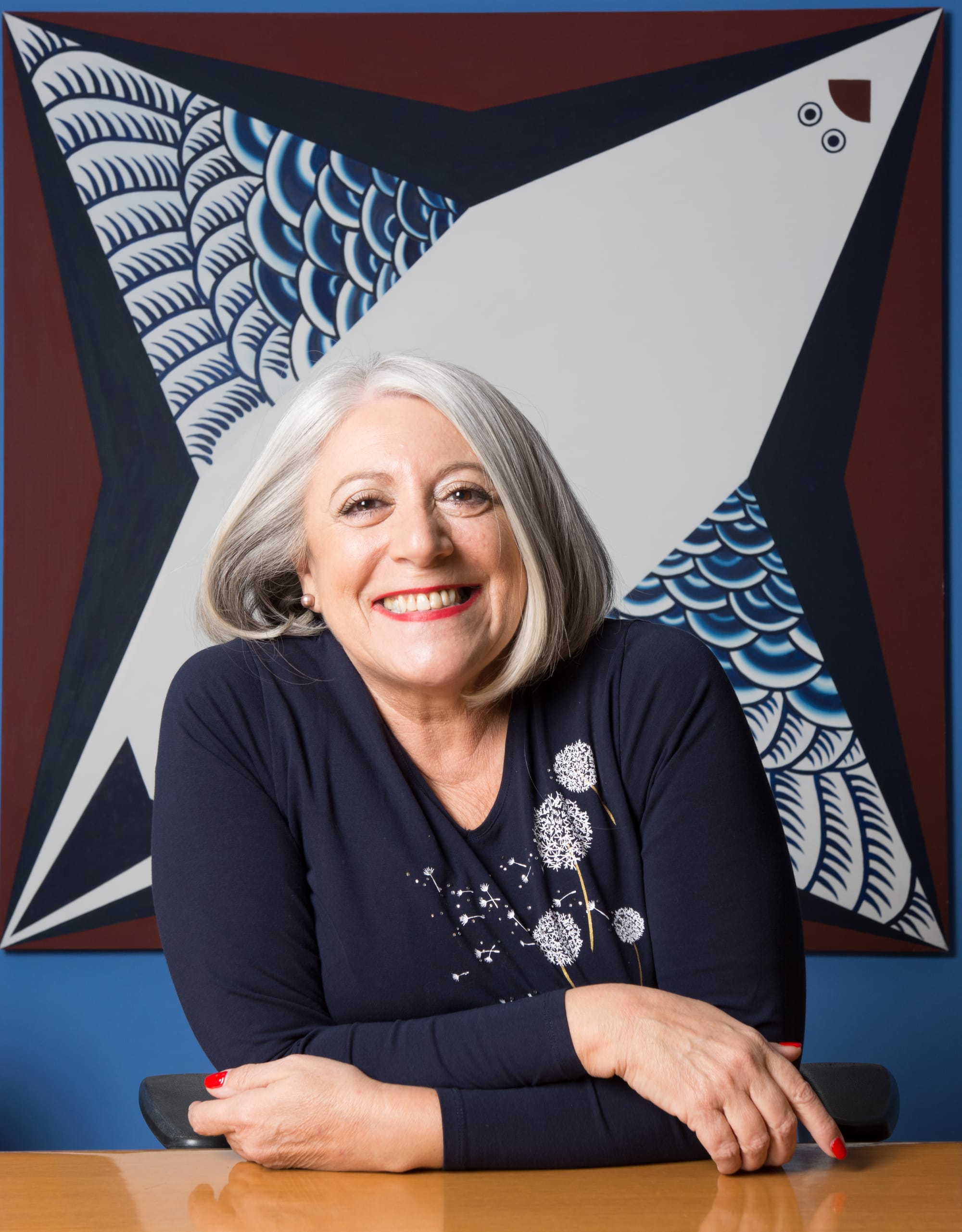
Paula began as an English lecturer with no formal business training. More than three decades later, her family company, Pique-Poque, works across Portugal’s cinema and events industries, as well as with smaller event businesses. Between those two points came an American business model that failed in Europe, rapid growth in the Netherlands, trade with Eastern Europe after the fall of the Berlin Wall, six years spent between two countries, the difficult decision to sell her first company, and a pandemic that forced her to rethink what a resilient business should look like.
In family businesses, the familiar story is that parents pass a company on to their children. With Paula, it happened almost the other way round. The idea of building a business around popcorn began with her, her father later developed it in Portugal, and many years afterwards, when Paula sold her own company in the Netherlands and moved closer to her family, the business found its way back into her hands.
“It’s a business from daughter to father,” she says, laughing.
At the time, Paula had imagined a very different life in Portugal. After years of entrepreneurship, constant travel and the challenge of combining work with caring for her son, she wanted to settle in the south of the country, stay close to her family and finally allow herself a slower pace. She pictured sunshine, golf, perhaps bridge, and rather less business.
Her father’s welcome was more practical: “Good, you’re here. These are the keys to the office. I’m retiring now.” Golf would have to wait.
Today, Pique-Poque works with the Portuguese cinema market, event companies, smaller entrepreneurs and clients outside Portugal. Yet Paula’s story is interesting less because of the scale of the company, or even the product itself, than because of how many times she has had to rethink what she believed about markets, growth and entrepreneurship.
The story begins in the United States in the mid-1970s. In 1975, Paula received an AFS scholarship and spent a year in America as an exchange student. She lived with a host family near Chicago and attended a local high school. It was a small town and the entertainment options were limited: the cinema, ice cream and McDonald’s. Going to the movies quickly became part of her American life.
“On Friday you went to the cinema, bought a big bucket of popcorn and a Coca-Cola. On Saturday you might go again and see another film. Popcorn wasn’t simply something you ate; it was part of going to the movies,” she recalls.
When Paula returned to Europe, she noticed how different the experience was. Some cinemas sold pre-packed popcorn, but the ritual of freshly made American-style cinema popcorn was largely absent.
Around the same time, Paula’s host father in the United States heard a simple observation from an Italian businessman he knew: there was a market opportunity in Europe that Americans had barely noticed – cinema popcorn. That conversation led to an early attempt to bring the American model across the Atlantic.
It did not go well. The American team started in Britain and effectively imported the US concept unchanged: salted, buttery popcorn that sold extremely well at home. British audiences at the time were much more accustomed to sweet popcorn. Instead of adapting the product, the team tried to persuade the market that the American preference was the right one.
Paula, who was then teaching English at Utrecht University and had no professional business background, watched from the sidelines and reached a conclusion that would later shape the way she approached markets: “I kept thinking, the idea is excellent – you’re simply doing it wrong. If people want sweet popcorn, there is no point telling them they should like salted popcorn because you sell millions of portions of it in America.”
Today, we would call this localisation. For Paula, it was closer to common sense: a concept can travel between countries, but consumer behaviour cannot simply be imported along with it.
After the unsuccessful British launch, the American side decided to close the project. Some of the machines and equipment were left in the UK, and Paula’s host father told her that she could take them if she believed there was an opportunity.
She did. Paula and her then husband hired a van, drove to Britain and brought several machines back to the Netherlands. There was no functioning business yet, so the first task was to understand exactly what she intended to sell. At home, they dismantled the machines and studied how each part worked.
“I knew I couldn’t walk into a customer’s business, install a machine and know nothing about it. If it broke down, I needed to understand what to do,” she says.
That instinct stayed with her. Decades later, Paula still talks about the product like someone who wants to understand why one raw material behaves differently from another, how the equipment works and what ultimately determines quality.
Her first conversations with Dutch cinema operators were not encouraging. Larger players regarded American popcorn as an alien product and told Paula that Dutch audiences would not eat it. One line has stayed with her ever since: “In Holland, corn is chicken feed.”
She was unconvinced. When she made the same popcorn for friends at home, they enjoyed it, so she kept looking for a place where she could test the idea using local sales rather than American statistics.
That place was a small cinema near a US military base. When Paula rang the owner, instead of the usual scepticism she heard the opposite: where had she been all this time? American customers kept asking for the popcorn they knew from home.
The cinema became more than her first real customer. It gave her the local proof she had been missing. Until then, she could show larger cinema groups American data and receive the perfectly reasonable reply that America was not the Netherlands. Now she could point to a Dutch cinema, its actual sales and the fact that local customers – not only Americans – were buying the product.
Paula later offered larger cinemas a low-risk way to test the category. For an initial period, they received the equipment and supplies they needed, while the commercial arrangement was linked to actual sales. It allowed customers to test the proposition before making a full commitment.
The model worked. The company expanded, and Paula soon discovered a problem that is rarely included in polished founder stories: demand can grow faster than the business itself can mature.
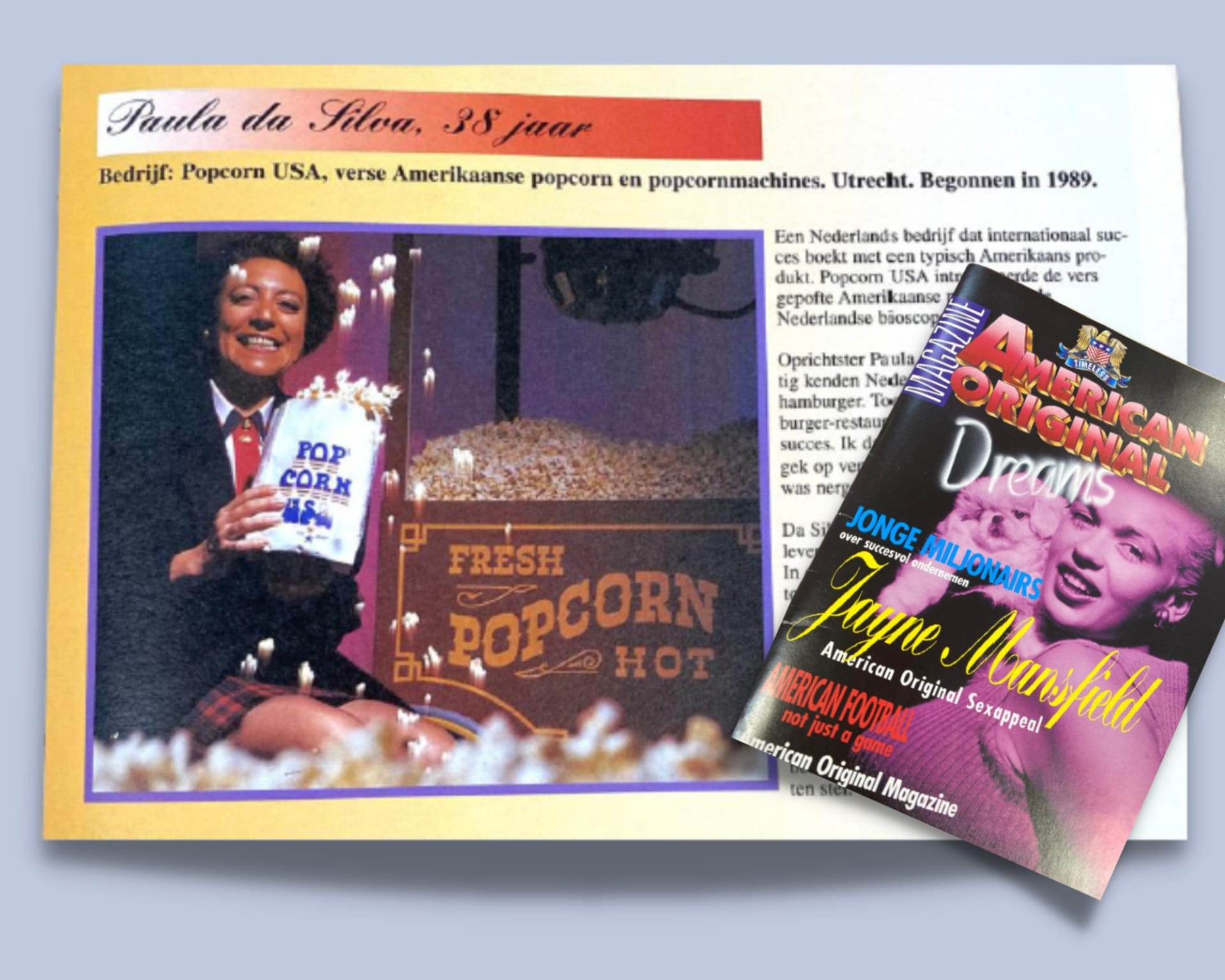
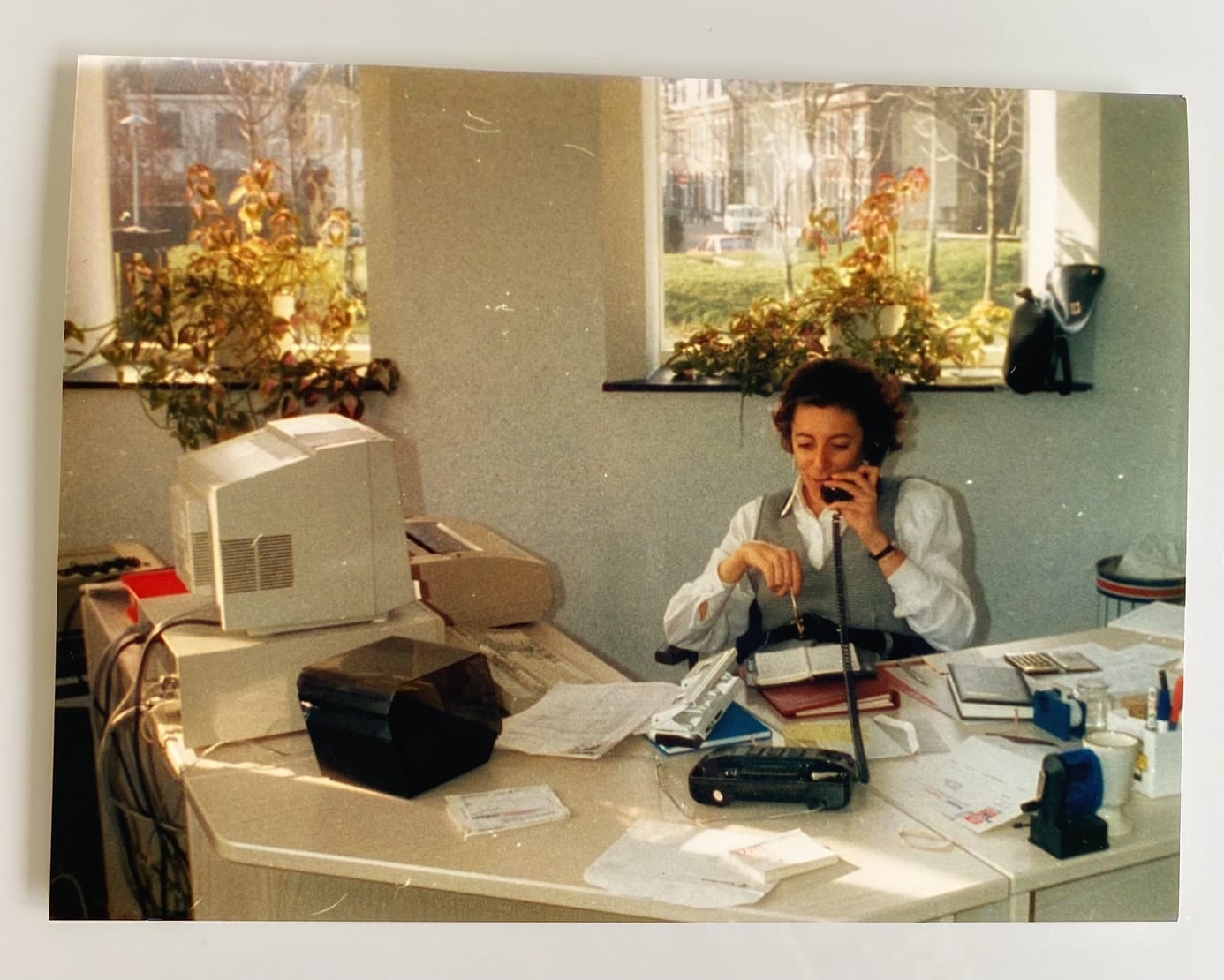
The company expanded geographically, began working with larger customers and took on more staff. From the outside, the trajectory looked entirely positive. Inside the business, however, another issue was emerging: the level of service Paula personally promised customers was becoming increasingly difficult to reproduce consistently through a growing team.
For Paula, a customer who ran out of supplies or had a technical problem just before an important weekend did not stop being her responsibility at five o’clock. She might get in the car and drive a considerable distance to fix the problem. It was unrealistic to assume that every employee would automatically have the same relationship with the company or the same tolerance for personal disruption.
“I was the face of the business. If I promised something and the company failed to deliver it, the customer did not think about which employee had made the mistake. It was my reputation,” she says.
Eventually she did something that can be psychologically harder for a founder than expansion itself: she deliberately slowed the business down. Not because demand had disappeared, but because she realised that continuing to grow without stabilising the operation could damage the company she had built.
That experience is still visible in the culture of Pique-Poque. For Paula, the sale does not end when the order is placed. If a client has a problem with equipment or supply during an event, the team tries to find a workable solution, even when it differs from the original plan. She sees service, and the willingness not to leave a customer alone with a problem, as part of the product itself.
At the end of the 1980s and the beginning of the 1990s, the business acquired an unexpected new dimension. After the fall of the Berlin Wall, enquiries began arriving from Central and Eastern Europe. The company worked with countries including Poland, Hungary, the former Czechoslovakia and Yugoslavia, and received orders from across the former Soviet sphere.
Rotterdam gave the company a genuine logistical advantage. Goods from the United States could arrive at one of Europe’s major ports and then travel east by road. Paula remembers the period as a separate entrepreneurial era: fax messages in imperfect English, complicated transport arrangements and markets learning to operate under new commercial rules at remarkable speed.
The opportunity lasted for several years. As local businesses developed their own direct import relationships, the need for a Dutch intermediary gradually declined. Paula does not describe that as a loss. The market opened a window, her company used it, and then the structure of the market changed. That ability not to expect a successful model to last forever would prove useful again.
The next major turning point had nothing to do with competition or the economy. Paula’s son had serious health problems; she was a single mother, while her close family lived in Portugal. Over time, running a company in the Netherlands while making sure her son had the support he needed became increasingly difficult.
She first tried to hand day-to-day management to a hired director, an experience she now describes simply as a disaster. Her parents then helped care for her son, while Paula spent several years dividing her life between Portugal and the Netherlands.
Remote management sounds almost ordinary today, but the technology of the time was rather different. “If the fax machine ran out of paper, you had a problem,” Paula says. Email and mobile phones eventually made things easier, but not easy.
In the end, she decided to sell the Dutch company. Finding the right buyer took years because Paula did not want to dispose of the business at any price simply because her personal circumstances created pressure to move on.
“That company had cost me years of very hard work. I couldn’t simply say, take it,” she explains.
After the sale, she finally moved to Portugal, believing the most intense entrepreneurial chapter of her life might be behind her. That was when her father handed her the office keys.
Success in the Netherlands had created the understandable impression that Paula already knew the essential rules of business. Portugal corrected that assumption fairly quickly. Negotiating habits, decision-making, financial culture and the rhythm of customer relationships were different.
One practical difference was payment behaviour. Paula was accustomed to relatively short payment terms in the Netherlands, whereas in Portugal, particularly when dealing with larger organisations, invoices could take considerably longer to move through internal approval processes. For a company that buys much of its stock from international suppliers under tighter payment conditions, that makes cash-flow management especially important.
She also noticed a cultural difference in the way women in business were treated. When Paula started in the Netherlands in her early thirties, she was a foreigner speaking Dutch with an accent and proposing a product many executives considered strange. They often said no, but they were willing to hear her out. In Portugal at that time, in her experience, attitudes towards women running businesses were more conservative. She is also careful to point out that the country has changed significantly in the decades since.
Perhaps that experience helps explain one of her recommendations to foreigners who want to build a business in Portugal: do not remain inside an English-speaking bubble. When Paula lived in the Netherlands, she insisted on learning Dutch even when people automatically switched to English with her. For her, language was not only a sales tool but a sign that she respected the country in which she wanted to work.
“You don’t have to speak perfectly. People can see that you are making the effort, that you are interested in their country and that you are not treating it as temporary scenery for your business.”
Before the pandemic, Pique-Poque had a strong position in its traditional market. Its core customers came from cinemas and events – precisely the sectors that almost simultaneously came to a halt in 2020.
Paula now jokes that a company which had spent decades as B2B suddenly became “B2Nothing”. Behind the joke was a real management challenge: the product still had emotional value for consumers, but the places and occasions in which they normally experienced it had disappeared.
Friends and acquaintances kept telling her that they missed cinema popcorn. They could still watch films at home, but supermarket popcorn did not recreate the same experience. Paula realised that people were not simply missing a snack; they were missing part of a familiar ritual.
The challenge was therefore to find a channel that remained available during restrictions. One solution was a partnership with a large petrol-station network, where ready-made popcorn could be purchased or ordered through delivery platforms. Paula remembers hearing from one location that demand was unexpectedly strong late at night, when people were at home watching films and trying to recreate a little of the cinema experience in their living rooms.
When the partner later redesigned its retail concept, the format gradually became less relevant. Paula did not treat this as proof that the idea had failed; the conditions had changed, so the solution had to change as well.
This is where the Pique-Poque story is entering a new phase. The company is not moving away from the professional B2B market that remains its foundation, but it is making its expertise and products more accessible to smaller event businesses and private customers. Its online shop allows customers to order outside standard office hours, which matters not only to someone planning a party at home but also to professional clients whose working day often continues long after a conventional office has closed.
The important shift is in what the customer is actually buying. A private customer is not simply ordering popcorn; they may be trying to bring the feeling of the cinema, a celebration or a shared evening into their home. For an event company, the value is different but related: popcorn becomes a simple, recognisable experience that helps shape the atmosphere of an event and gives guests something sensory and familiar, without requiring the organiser to invent an entire food concept from scratch.
Pique-Poque supports that experience with a professional range built around different use cases. The company supplies several types of popcorn kernels, including mushroom popcorn, which works particularly well for coated products, and butterfly popcorn, commonly used for classic salted popcorn. The wider range includes professional oils, nachos, candyfloss products, packaging and related supplies. Equipment, spare parts and technical support form another part of the business, alongside ready-made popcorn for situations in which on-site production is unnecessary or impractical.
This is closer to the way Paula herself sees the company: not as a seller of one isolated product, but as a business that helps a customer achieve the right result for a particular occasion.
Paula is careful to distinguish Pique-Poque from a business built purely around selling equipment or raw materials at the lowest possible price. For her, quality begins with the product but does not end there. If a customer has bought equipment and later runs into a technical problem, or if supply fails during a large event, the company tries to help find a solution.
“I don’t want the model to be: we sold it, we got paid, and now it’s no longer our concern.”
That sentence says a good deal about her. Pique-Poque still carries the behaviour of a founder who remembers a time when every customer knew her personally and every problem automatically became her problem. That level of involvement once pushed the company close to its operational limits, but it also helped establish the standard of service Paula is reluctant to compromise.
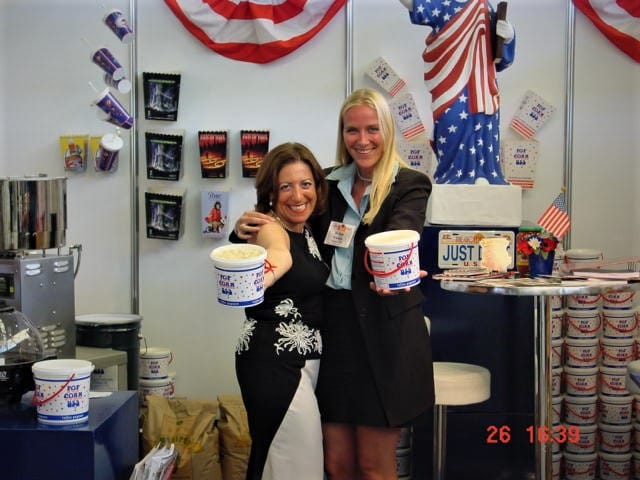
When the conversation moves from business models to why Paula has stayed in this industry for decades, she returns to something much simpler: she likes the character of the product itself.
“I can’t imagine being in a business where I don’t care about what I’m selling. I like thinking that we do something that gives people pleasure.”
She describes the category as “fun food”. Her former company in the Netherlands even used the slogan “Popping to serve you”, a play on both the product and the attitude she wanted customers to feel.
That attention to people appears in unexpectedly small details. When discussing the visual identity of Pique-Poque, for example, Paula talks about typefaces designed to be easier for people with dyslexia to read. She is not dyslexic herself, but knows people for whom certain typographic choices create genuine difficulty. For her, making communication more accessible is simply a practical consideration.
In that sense, “fun” in her business philosophy does not mean superficial. It is closer to the idea of making an experience a little more enjoyable, whether the person is a guest at a large event, a child at a family celebration or a customer who suddenly needs help with equipment on a Saturday evening.
When asked what she would tell someone considering starting a business, Paula is not sentimental about entrepreneurial freedom. Her phrase is “business with passion”, but she quickly makes clear that passion has little to do with inspirational slogans about doing what you love.
Particularly at the beginning, a business takes up far more space in your life than many people expect. It is unrealistic to assume that you can preserve the structure of a nine-to-five job, carry all the same family responsibilities and simultaneously build a fast-growing company without changing anything around you. Help has to be arranged, domestic responsibilities redistributed, and the limits of one person’s time and energy acknowledged.
For Paula, this is not an abstract lesson. She went through a period in which she was simultaneously a business owner, a single mother and the main person responsible for a child with serious health difficulties. That is why she does not offer women another heroic promise that it is possible to do everything. Her advice is more practical: before you begin, understand honestly how your life will need to change and who will be there when the business demands more than a standard working day.
Paula now lives in Cascais and talks about gradually reducing her operational role. Decades of entrepreneurship, she says, have given her a great deal, but they have also taken a great deal. She built and sold one company, effectively started again in another country, combined business with difficult family circumstances and lived through a crisis that temporarily stopped almost all of her traditional market.
These days, she likes the idea of a life by the ocean with a little more room for things that are not work. Yet when I ask what she will do after stepping back from day-to-day management, Paula is cautious.
“I try not to think about it too much yet, because I know myself. The moment I start thinking, I’ll come up with another idea.”
Perhaps that is the most accurate description of her entrepreneurial character. At different points she was told that Europeans would not adopt American-style popcorn, that the Dutch market was not ready for it and, later, that an established model should continue to work simply because it had worked before. Reality repeatedly forced her to revisit not only other people’s assumptions but her own: first through growth that became too fast, then through personal circumstances, and many years later through the pandemic.
Paula does not appear to see change as proof that the previous strategy was wrong. For her, it is simply part of business. She remembers a Dutch saying: if you stand still, you are actually moving backwards. Perhaps that is why, even now, when she would like more time to look at the ocean, the greatest threat to that plan remains her own next idea.

Got a story worth telling? Be our next guest!
🎙️ Apply now to be interviewed or published on our platform.
Subscribe now for exclusive content and expert insights. Be the first to stay informed!

Probusiness Media is an independent editorial platform that explores the stories, strategies, and systems behind conscious entrepreneurship in times of change.
Where stories, strategy, and meaning come together.